
Poster terbaru promosi siri buku "Berpetualang ke Aceh".
Latest poster for promoting "Berpetualang ke Aceh" book series.
Klik pada gambar untuk mendapatkan fail dalam saiz sebenar.
Click at the picture to get the file in its actual size

Poster terdahulu sebelum keluarnya BKA III. The previous poster before BKA III came out

Poster pertama dibuat untuk promosi siri buku Jun 2007. The first poster made for book series promotion June 2007

-----------------------

"Berpetualang ke Aceh: Mencari Diri dan Erti".

ISBN 983-42031-0-1, Jun 2006
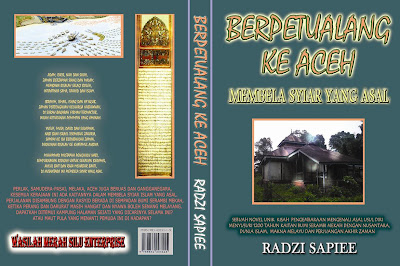
"Berpetualang ke Aceh: Membela Syiar yang Asal"

ISBN 983-42031-1-x, Mei 2007

"Berpetualang ke Aceh: Sirih Pulang ke Gagang?"

ISBN 978-983-42031-2-2, November 2007

Ini pula adalah buku ke-empat saya bertajuk "Rumah Azan". Diterbitkan April 2009 oleh syarikat Karnadya dengan pertolongan Dewan Bahasa dan Pustaka, buku ini memaparkan gambar-gambar cantik berserta cerita di sebalik masjid-masjid terpilih yang boleh dikaitkan dengan sejarah Melayu Islam dan pembentukan negara Malaysia.

This is my fourth book titled "Rumah Azan". Published in April 2009 by the company Karnadya with the help of Dewan Bahasa dan Pustaka, this book features beautiful pictures along with stories behind selected mosques which could be related to the history of Islam and the Malays and the formation of the nation of Malaysia.
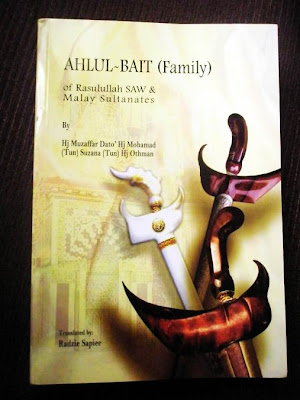
Buku kelima saya "Ahlul Bait (Family) of Rasulullah SAW and the Malay Sultanates" baru diterbitkan awal 2010. Ia merupakan terjemahan buku "Ahlul Bait (Keluarga) Rasulullah SAW dan Kesultanan Melayu" karangan Hj Muzaffar Mohamad dan Tun Suzana Othman ke dalam bahasa Inggeris untuk pasaran antarabangsa.

My fifth book "Ahlul Bait (Family) of Rasulullah SAW and the Malay Sultanates" was just published early 2010. It is a translation of the Malay-language book "Ahlul Bait (Keluarga) Rasulullah SAW dan Kesultanan Melayu" authored by Hj Muzaffar Mohamad and Tun Suzana Othman turned into English for the international market.

----------------------------

Untuk maklumat lanjut sila masuk http://www.merahsilu.blogspot.com/

For more information, please enter http://www.merahsilu.blogspot.com/

----------------------------
Monday, January 25, 2010

Masjid Jamek (Main mosque of) Kluang

Dari Kota Tinggi kita beralih ke Kluang...
From Kota Tinggi we move on to Kluang...


Di sini terdapat Masjid Jamek Kluang yang banyak menggamit kenangan...
Here exist the main mosque of Kluang which offers many nostalgic memories...

Inilah masjid tempat saya sering bersolat Jumaat semasa di sekolah menengah lebih 22 tahun lalu...
This is the mosque where I often did my Friday prayers when I was at secondary school more than 22 years ago...


Ketika itu saya sedang belajar di Sekolah Menengah Sains Johor, sebuah sekolah berasrama penuh terkemuka.
At the time I was studying at the Johor Science Secondary School, a reputable full-boarding school.


Dewan utama solat...
Main praying hall...


Bahagian dalam kubah...
The inner part of the dome...


Mimbar.
The pulpit.


Thursday, January 21, 2010

Makam Tauhid (The Tauhid tomb)


Seberang jalan sekitar 1 km daripada makam Tun Habib terdapat pula Makam Tauhid...
Across the road some 1 km from the tomb of Tun Habib lies in the turn the Tauhid tomb...


Oleh kerana saya sampai di sini sekitar jam 8 malam, saya terpaksa menggunakan lampu kereta untuk menembusi kegelapan...
Since I arrived here sometime around 8 at night, I have to us the carlights to penetrate the dark...

Papan maklumat menyatakan tempat ini sebagai kota juga makam. Kota Tauhid (pada papan dieja Touhid) menjadi pusat pemerintahan Empayar Johor-Riau 2 kali, iaitu pada zaman pemerintahan Sultan Abdul Jalil III (1633-1677) seterusnya Sultan Abdul Jalil IV (1699-1718), anakanda Bendahara Tun Habib yang menaiki takhta setelah kemangkatan Sultan Mahmud Mangkat Dijulang.
The information boards states that this place as a fort also a tomb area. Kota (fort of) Tauhid (on the board it is spelt Touhid) became the centre of rule for the Johor-Riau Empire twice, that is during the rule of Sultan Abdul Jalil III (1633-1677) followed by Sultan Abdul Jalil IV (1699-1718), the son of Bendahara Tun Habib who ascended the throne after the demise of Sultan Mahmud Mangkat Dijulang (a famous Sultan who was killed while being carried on a pedestal).


Ini pula tinggalan yang ada...

This is the remains of what is left...


Terdapat beberapa buah makam lama...
There exist a number of old tombs...


Batu nesan yang digunakan adalah dari jenis Batu Aceh juga menandakan pemiliknya berdarah raja ataupun bangsawan.
The tombstones used are also of the type known as Batu Aceh signifying its owners as coming from the bloodlines of royalty or nobility.


Lawatan terbaru ke makam Tun Habib (Latest visit to the tomb of Tun Habib)

Dalam lawatan terbaru ke Kota Tinggi bulan November 2009 saya juga melawat makam Bendahara Tun Habib Padang Saujana , juga dikenali sebagai Tun Habab Abdul Majid.
In my latest visit to Kota Tinggi in the month of November 2009 I also visited the tomb of Bendahara (the most senior palace official) Tun Habib Padang Saujana, also known as Tun Habab Abdul Majid.


Seperti lawatan pertama kali ke sini Disember 2007, saya juga sampai waktu senja...
Just like the first visit here in December 2007, I also arrived at dusk...

Bezanya kali ini saya memakai kamera yang lebih canggih...
The difference is this time I used a more advanced camera...


Walaupun keadaan ketika itu sebenarnya sudah mula gelap, dengan kamera ini saya dapat menangkap gambar yang agak terang. Untuk makluman di atas adalah makam Tun Habib. Yang lain adalah makam kaum keluarganya...
Although the condition at the time was actually turning dark, with this camera I was able to take rather clear pictures. For information the one on top is the tomb of Tun Habib. The rest are tombs of his family members...


Makam beliau dari sudut lain. Untuk maklumat lebih terperinci lihat artikel Makam (tomb of ) Bendahara Tun Habab yang dibuat 2 tahun lalu. Di situ maklumatnya panjang lebar tetapi gambarnya kelam-kelam. Kiranya artikel ini mengisi apa yang kurang pada artikel lama dan begitulah sebaliknya! :]
His tomb seen from a different angle. For more detailed information look at the article Makam (tomb of ) Bendahara Tun Habab which was made 2 years ago. There the information is extensive but the pictures look dark. In a sense this article fills up what was lacking in the old one and so is the case vice versa! :]

Masjid (Mosque of) Kampung Johor Lama...

Sampailah masanya untuk memecah kesunyian, setelah membuat artikel ke 313 di blogspot ini, Kota Johor Lama (Johor old fort) 8 hari lalu...
Now come the time to break the silence, after making the 313th article at this blogspot, Kota Johor Lama (Johor old fort) 8 days ago...


Lebih kurang 2 km ke utara Kota Johor Lama terletak pula Kampung Johor Lama dan masjidnya...

About 2 km north of the fort of Johor Lama there lies in turn Kampung (village of) Johor Lama and its mosque...


Masjidnya ringkas tetapi terasa begitu bermakna...
The mosque is simple but feels so meaningful...

Sampai sahaja di sini, saya terfikir apakah masjid ini dibina di atas tapak masjid lama ketika Johor Lama pernah menjadi pusat pemerintahan Empayar Johor-Riau 500 tahun lalu?
The minute I arrived here, came to mind a thought was this mosque built upon the site of the old mosque when Johor Lama used to be the centre of rule for the Johor-Riau Empire 500 years ago?


Ini tidak mustahil apabila mengenangkan Kampung Johor Lama memang terletak di atas kawasan Johor Lama yang dahulu. Cuma perubahan zaman sahaja menyaksikan kawasan yang dahulunya menjadi pusat sebuah empayar kini tinggal menjadi kampung kecil sahaja.
This is not impossible when one remembers that Kampung Johor Lama is indeed located on top of the area of Johor Lama of old. It's just change of times which have seen an area which was once the centre of an empire being left to become just a small village now.


Sekarang mari kita lihat sekelilingnya...
Now let us have a look around...


Lihat kedudukannya di tepian Sungai Johor yang sangat luas. Dapatkah anda bayangkan kehadiran banyak kapal dagang ketika Johor Lama masih lagi pusat empayar?
Look at its position at the side of the Johor river which is very wide. Can you imagine the presence of many trading ships when Johor Lama was still the empire's centre?


Dewan solat...
The praying hall...


Mimbar.
The pulpit.


Wednesday, January 13, 2010

Kota Johor Lama (Johor old fort)

Assalamualaikum semua. Sukacita dimaklumkan anak kecil saya Muhammad Al-Aminul Rasyid sudah berumur 3 bulan pada hari ini 13 Januari. Oleh kerana artikel baru ini akan menjadi artikel ke 313 di blogspot ini biar saya mempersembahkannya sekarang walaupun asalnya ia patut dibuat 4 hari lagi. Mari...
Peace be upon you all. It is a pleasure to inform that my young child Muhammad Al-Aminul Rasyid is now 3 months old on this day 13th of January. Since this new article would be the 313th in this blogspot let me present it now although originally it was planned to be made 4 more days from now. Come...

Lebih kurang 22 km di tenggara bandar Kota Tinggi terletak Kota Johor Lama...

Some 22 km south-east of the town of Kota Tinggi lies Kota Johor Lama (the old fort of Johor)...

Ia adalah satu peninggalan sejarah yang penting sehingga dibina satu pusat maklumat...
It is an important historical site such that an information centre was built around...


Terdapat sebuah muzium untuk menceritakan keadaan.
There is a museum to tell the actual condition.


Sedangkan Kota Johor Lama itu sendiri tinggal longgokan-longgokan tanah.
While the Johor old fort itself is left with heaps of soil.


Tersebut di sini bahawa Kota Johor Lama adalah sebuah kota pertahanan yang dibina pada tahun 1540 Masihi oleh Sultan Alauddin Riayat Shah II, pemerintah empayar Johor-Riau 1528-1564. Ketika itu empayar yang mewarisi jajahan takluk Melaka ini sedang hangat berperang dengan Portugis, kuasa penjajah Barat yang berjaya menawan Kota Melaka tahun 1511.
It is said here that the Johor old fort was a defence fort built in the year 1540 AD by Sultan Alauddin Riayat Shah II, ruler of the Johor-Riau empire 1528-1564. At the time the empire which inherited the colonies of Melaka was hotly in war with the Portuguese, the Western colonial force who succeeded in capturing the city of Melaka in the year 1511.


Lihat longgokan-longgokan tanah yang membentuk benteng pertahanan...
Look at the heaps of soil which form the defence fortification...


Pandangan dari hujung sana...
A look from the other end...


Terdapat celah-celah untuk meletakkan meriam...
There are openings for placing cannons...


Ini pula adalah tangga menuruni bukit menghala ke Sungai Johor. Untuk pengetahuan Kota Johor Lama terletak di puncak bukit tepian sungai...
This in turn is a staircase leading downhill towards the river of Johor. For information the old fort of Johor is situated at the top of hill besides the river...


Ini adalah benteng kota dilihat daripada lereng bukit tepian sungai. Dapat dibayangkan bahawa suatu masa dahulu lereng bukit ini sudah diterangkan tanpa pohon, untuk memudahkan pemantauan terhadap apa-apa pergerakan di perairan Sungai Johor. Kota Johor Lama terletak sekitar 14 km dari kuala Sungai Johor. Namun sungainya begitu lebar... di sini sahaja jaraknya sekitar 2.5 km untuk sampai ke seberang sana!
This is the fortification seen from the hillside near the river. One could imagine that once upon a time the hillside was cleared from trees, to make it easy to monitor whatever movement made in the waters of the Johor river. The fort of Johor lama is situated some 14 km from the estuary of the Johor river. Still the river is very wide... around these parts alone it is a distance of 2.5 km to reach the other side!


Masjid (Mosque of) Sultan, Kampung Gelam

Seterusnya kita ke Masjid Sultan di Kampung Gelam, asalnya sebuah perkampungan Melayu tradisional yang turut mengandungi istana Sultan.
Next we go to the Sultan mosque at Kampung Gelam, originally a Malay traditional village which included the palace of the Sultan.


Sejarah menyebut bangunan asal masjid ini yang berbumbung piramid dua lapis dibina pada 1824, tahun empayar Johor-Riau dipecah dua melalui Perjanjian Inggeris-Belanda. Sultan Hussain Shah yang diangkat menjadi raja bahagian empayar naungan Inggeris membina masjid bersebelahan istana baginda di Kampung Gelam. Maka ia adalah masjid tertua yang masih wujud di Singapura...
History mentioned that the original mosque building which has a two-tier pyramid-shaped roof was built in 1824, the year the Johor-Riau empire was broken into two through the Anglo-Dutch Treaty. Sultan Hussain Shah who was raised to be the ruler of that part of the empire's under English patronage built the mosque next to his palace in Kampung Gelam. Thus it is the oldest mosque still in existence in Singapura.


Sejarah turut menyebut masjid ini dibina semula ke bentuk kini tahun 1924. Saya pernah diberitahu bahawa Masjid Sultan adalah yang pertama disekitar Tanah Melayu memakai kubah berbentuk separuh bulat atas tajam, juga dikenali sebagai kubah potong bawang. Bentuk ini sebenarnya berasal daripada Timur Tengah dan India Utara, dibawa ke Nusantara oleh penjajah Barat. Kenyataan ini mungkin betul jika kubahnya telah dibina lebih awal. Kalau setakat tahun 1924, rasanya ada masjid-masjid di Malaysia yang sudah memiliki kubah terlebih dahulu.
History also mentioned this mosque was rebuilt to get its current shape in the year 1924. I was once told that Masjid Sultan is the first in the Malay lands and around to use the dome shaped like a half-sphere with a pointed top, also known as "kubah potong bawang" (the union-cut dome). This shape actually originated from the Middle East and Northern India, brought to Nusantara or the Malay archipelago by the Western colonialists. The statement might be true if the dome was built earlier. If it was just in the year 1924, then I believe there are mosques in Malaysia which already have such domes first.


Sekarang mari lihat ke dalam.
Now let's have a look inside.


Bahagian belakang dewan solat utama...
The rear section of the main prayer hall...


Bahagian hadapan...
The front section...


Kelihatan ada bentuk senibina gereja...
There appears to be church architecture...


Namun ini tidak menyalahi prinsip agama Islam. Untuk pengetahuan kubah dan menara masjid juga asalnya diambil daripada senibina Kristian Byzantium di Eropah, sebelum diaplikasikan pada bangunan masjid di Mekah dan Madinah lalu diikuti di bahagian lain empayar Islam. Sekian.
Still this does not go against the principles of Islam. For information domes and towers of the mosque was original taken from the architecture of Christian Byzantium in Europe, before it was applied to mosques in Mecca and Madinah and thus was followed at other parts of the Islamic empire. That's all.

Tuesday, January 12, 2010

Makam (Tomb of) Radin Mas Ayu

Di bahagian lebih tinggi lereng Bukit Teluk Belanga (sekarang dikenali sebagai Mount Faber) terdapat makam Radin Mas Ayu, seorang puteri dari Jawa.
At a higher section of the sides of the hill of Teluk Belanga (now known as Mount Faber) there exist the tomb of Radin Mas Ayu, a princess from Jawa (Java).


Masuk sahaja ke kawasan makam boleh kelihatan makam penjaganya Radin Dandiar di tepi kiri...
The minute upon entering the tomb area one could see the tomb of her caretaker Radin Dandiar at the left side...

Makam utama terletak lebih tinggi.

The main tomb is situated higher.


Inilah Makam Radin Mas, seorang puteri Jawa yang menjadi satu legenda di Singapura.
This is it the tomb of Radin Mas, a princess of Jawa who became a legend in Singapura.

Makam diraja (Royal tomb complex) of Johor, Teluk Belanga, Singapura

Di sebelah Masjid Teluk Belanga pula terdapat kawasan pemakaman diraja Johor.
Besides the mosque of Teluk Belanga in turn lies a royal tomb complex of Johor.


Berbanding makam diraja lagi satu di Johor (lihat Makam diraja (Royal tomb complex of) Johor, Jalan Mahmoodiah, Johor Bahru ), kawasan pemakaman ini lebih tua.
Compared to the other royal tomb complex in Johor (look at Makam diraja (Royal tomb complex of) Johor, Jalan Mahmoodiah, Johor Bahru ), this tomb complex is much older.


Ini disebabkan di Teluk Belanga lah keluarga diraja Johor moden lebih dahulu bertapak.
This is because it was in Teluk Belanga that the royal family of modern Johor were based at.


Asalnya mereka cuma keluarga Temenggung tetapi dapat merajai Johor apabila empayar Johor-Riau dipecah-belahkan Inggeris dan Belanda.
Originally they were just the family of Temenggung (a high palace of official) but got to rule Johor after the empire of Johor-Riau was broken apart by the English and Dutch.


Kawasan sekeliling di luar dipenuhi makam-makam lama.
The area around outside is filled with old tombs.


Paling terserlah adalah sepasang makam ini di lereng bukit...
The most outstanding is these pair of tombs at the hillside...


Satu daripadanya tertulis gelaran "Sultan Johor". Saya tak tahu Sultan yang mana satu kerana setahu saya semua Sultan Johor daripada keluarga Temenggung dimakamkan di Johor Bahru. Kemudian ada orang menegur saya, yang tertulis itu "Sultanah Johor" bukan "Sultan Johor". Nampaknya saya terlepas pandang huruf Jawi Ha pada tulisan itu...
One of it has the inscription bearing the title "Sultan of Johor". I don't know which Sultan is this since as far I know all Sultans of Johor from the Temenggung family were buried in Johor Bahru. Later someone corrected me sayang what is written is "Sultanah Johor" (the queen) not "Sultan Johor". Looks like I have missed the Jawi letter Ha in the inscription...


Di sebelahnya pula rasanya makam permaisurinya. Itulah yang saya sangkakan mulanya. Tetapi kalau yang tadi adalah makam Sultanah takkan le ini permaisurinya pula. Jadi saya pun tak pasti makam siapa. Nak baca tulisannya pun tak berapa reti. Sekian.
Next to it I think is the tomb of his queen. At least that was what I thought at first. But if the recent tomb is that of the Sultanah how can this in turn be the queen. So I am not sure whose tomb is this. I'm not so good at reading the inscription. That's all.


Masjid (Mosque of) Teluk Belanga

Lebih 3 km ke barat Makam Habib Nuh terdapat Masjid Teluk Belanga
More than 3 km to west of Habib Nuh's tomb lies the mosque of Teluk Belanga


Ia adalah satu lagi tempat yang melambangkan keberadaan orang Islam terutama Melayu di Singapura.
It is another place which symbolises the existence of Muslims especially Malays in Singapura.


Saya difahamkan ia terletak di atas tanah milik kerajaan Johor.
I understand it is situated on top a land owned by the Government of Johor.


Kawasan Teluk Belanga dahulu pernah menjadi pusat pentadbiran keluarga Temenggung yang kini merajai Johor.
The area of Teluk Belanga once used to be the centre of administration for the Temenggung (a high palace official) family who now rules Johor.


Makam Habib Nuh dan masjid di sebelah (Habib Nuh's tomb and the mosque besides)

Dari Pontian kita ke Singapura...
From Pontian we move on to Singapura...


Di satu hujung Palmer Road, Singapura boleh kelihatan bangunan unik dengan tangga tinggi ini...

At one end of Palmer Road, Singapura could be seen this unique building with its high staircase...

Naik tangga dan masuk ke dalam akan kelihatan makam ini...
Go up the stairs and go inside and this tomb would come into view...


Inilah makam Habib Nuh seorang alim yang dianggap sebagai wali...
This is the tomb of Habib Nuh a religious person who is considered as a saint...


The belakangnya terdapat sebuah makam lagi.
Behind it there exist one more tomb.


Yang ini milik Habib Abdul Rahman al-Habshi.
This one belongs to Habib Abdul Rahman al-Habshi.


Di tepi bawah bangunan makam bersambung pula bangunan ini.
Down besides the tomb building there lies this connecting building.


Ia adalah sebuah masjid rasanya satu-satunya di sekitar ini...
It is a mosque, I think the only one around here...


Lihat di dalamnya...
Look at the inside...


Ia ibarat sebuah oasis ketenangan di tengah kegersangan spiritual hiruk-pikuk masyarakat kota.
It could be likened to a calming oasing in the centre of the spiritually barren noises of the city folks.

Friday, January 08, 2010

Makam diraja (Royal tomb complex of) Johor, Jalan Mahmoodiah, Johor Bahru

Di Jalan Mahmoodiah tidak jauh dari Masjid Abu Bakar terdapat sebuah tanah perkuburan yang luas...

At Jalan (street of) Mahmoodiah not far from the mosque of Abu Bakar there exist a wide burial ground...


Satu bahagiannya dihadkan untuk kerabat diraja Johor...

One part of it is reserved for the royal family of Johor...


Para kerabat utama termasuk Sultan-sultan Johor disemadikan di dalam bangunan ini...

The main kith and kins including Sultans of Johor are laid to rest in this building...


Sultan-sultan Johor ini adalah dari Dinasti Temenggung yang mula menaiki takhta penghujung abad ke 19 Masihi...


These Sultans of Johor are from the Temenggung (a major palace official) Dynasty who ascended the throne at the end of the 19th century AD...


Untuk pengetahuan Johor sebelum itu diperintah oleh Sultan-sultan dari Dinasti Bendahara...

For information Johor before that was ruled by Sultans from the Bendahara (the most senior palace official) Dynasty...


Sebelum tahun 1700 pula Johor diperintah oleh Sultan-sultan yang berketurunan Raja Melaka...

In turn, before the year 1700 Johor was ruled by Sultans descended from the kings of Melaka...


Namun saya lebih tertarik pada satu makam di luar bangunan utama...

Still I was more attracted to a tomb outside the main building...


Inilah makam Sultan Ismail Muabiddin Shah, Sultan yang memerintah Perak sejurus sebelum Perjanjian Pangkor 1874 berkuatkuasa.

This is the tomb of Sultan Ismail Muabiddin Shah, the Sultan who ruled Perak just before the Pangkor Treaty of 1874 was enforced.


Masjid (Mosque of Abu Bakar), Johor Bahru...

Dari Pontian kita beralih ke Johor Bahru. Mari! :]
From Pontian we move on to Johor Bahru. Come! :]


Dari tepian Selat Tebrau mendekati pusat bandaraya Johor Bahru boleh kelihatan masjid ini...

From the side of the Straits of Tebrau approaching Johor Bahru city centre could be seen this mosque...


Selamat datang ke Masjid Abu Bakar, masjid utama negeri Johor.
Welcome to the mosque of Abu Bakar, the main mosque of the state of Johor.


Mari kita lihat ke dalam...
Let us go inside...


Seperti di mana-mana masjid, pengunjung terutama wanita mesti menutup aurat...
Like at any mosque, visitors especially women must cover their body parts...


Serambi kiri masjid...
The mosque's left verandah...


Dewan utama solat kelihatan serupa dengan apa yang terdapat di Masjid Jamek Muar (lihat artikel Masjid Jamek (main mosque) of Muar... ). Dewan utama Masjid Muhammadi di Kota Bahru, Kelantan (lihat Masjid (mosque of) Muhammadi, Kota Bahru, Kelantan... ) juga hampir serupa.
The main praying hall looks similar to the ones available at the main mosque of Muar (look at the article Masjid Jamek (main mosque) of Muar... ). The main hall of the Muhammadi mosque in Kota Bahru, Kelantan (look at Masjid (mosque of) Muhammadi, Kota Bahru, Kelantan... ) also looks almost the same.


Tetapi tidak seperti di 2 masjid itu, mimbar di Masjid Abu Bakar dibuat daripada besi.
But unlike at the 2 mosque, the pulpit at the mosque of Abu Bakar is built from steel.


Ini ialah ruang solat wanita yang terletak di belakang atas...
This is the women's praying section which is located at the upper rear...


Bahagian luar ruang solat wanita...

The outer parts of the women's praying section...


Sekarang baru kita melihat masjid daripada laman utama...
Now only we have a look at the mosque from the main lawn...


Di sini terletak papan-maklumat tentang masjid...
Here is put the information board on the mosque...


Wednesday, January 06, 2010

Masjid (Mosque of ) Teluk Kerang

Bersambung daripada artikel Muzium Bugis (Bugis Museum), Teluk Kerang .
Continued from the artikel Muzium Bugis (Bugis Museum), Teluk Kerang .


Betul-betul bersebelahan muzium terdapat Masjid Teluk Kerang...

Right next to the museum lies the mosque of Teluk Kerang...


Satu perkara yang menarik ialah bumbung-bumbung masjid yang berbentuk payung...

An interesting feature are roofs of the mosque which are shaped like umbrellas...

Namun ciri ini tidak akan bertahan lama nampaknya. Kenapa? Biar kita masuk dahulu...
Still this feature would not last long it seems. Why? Let us go inside first...


Ruang solat belakang...
The rear section for prayers...


Pintu masuk ke dewan utama solat sedang berkunci semasa saya sampai. Maka cukuplah kita lihat dari luar...
The entrance to the main praying hall was locked when I arrived. Thus it is enough that we just view it from outside...


Pada dinding masjid ada kelihatan pelan untuk binaan masjid baru. Nampaknya seperti masjid separuh kayu di Sungai Durian (lihat artikel Masjid (Mosque of) Sungai Durian, Serkat, Pontian ), Masjid Teluk Kerang juga akan berubah rupa tidak lama lagi. Sekian.
On the walls of the mosque could be seen the plan for a new mosque building. It seems that just like the part wooden mosque at Sungai Durian (look at the article Masjid (Mosque of) Sungai Durian, Serkat, Pontian ), the mosque of Teluk Kerang would also change face soon. That's all.

Muzium Bugis (Bugis Museum), Teluk Kerang

Tidak jauh dari Kukup, iaitu di Teluk Kerang, terdapat muzium ringkas ini...
Not far from Kukup, that is at Teluk Kerang, there lies this simple museum...


Ia adalah sebuah museum persendirian yang didirikan oleh seorang warga tempatan...
It is a private museum built by a local...

Kebanyakan barangan yang terpampang merupakan dokumen dan gambar-gambar lama...
Most of the goods displayed are documents and old pictures...


Terdapat juga barangan hiasan rumah dan sebagainya, semuanya berkaitan Bugis...
There are also house decorations and such, all related to Bugis (an ethnic Malay group from the island of Sulawesi in Indonesia)...


Muzium ini terbuka kepada semua pada siang hari. Elok juga bertandang untuk mengisi masa dan belajar sedikit sejarah...
This museum is opened to all during daytime. It's good to pay a visit to fill time and study a bit of history...


Masjid (Mosque of) Sungai Durian, Serkat, Pontian

Sekarang mari kita ke daerah Pontian, Johor...
Now let us go to the district of Pontian, Johor...


Ini adalah masjid yang terdapat di Sungai Durian, Serkat, selatan Pontian...

This is a mosque available at Sungai Durian, Serkat, south Pontian...

Kombinasi bangunan kayu dan batu membuat saya ingin melihat lebih dekat...
The combination of wood and concrete made me want to have a closer look...


Saya diberitahu bahagian kayunya akan dirobohkan tidak lama lagi untuk digantikan dengan batu...
I was told that the wooden section would be demolished soon to be replaced with concrete...


Maka elok juga direkodkan gambar masjid ini. Mari kita lihat ke dalam pula...
Thus it is good to record pictures of this mosque. Let us have a look inside in turn...


Ruang salat...
The prayer hall...


Mimbar. Cukuplah ini untuk membentuk artikel ke 303 di blogspot ini...
The pulpit. These should be enough to form the 303th article in this blogspot...


Wednesday, December 30, 2009

Masjid jamek (main mosque) of Seremban

Sekarang kita ke Seremban...
Now we go to Seremban...


Di satu bahagian ibunegeri Negeri Sembilan ini boleh kelihatan masjid ini...

At one part of this state capital of Negeri Sembilan could be seen this mosque...


Selamat datang ke Masjid Jamek Seremban...
Welcome to the Masjid Jamek (main mosque of) Seremban...

Walaupun Seremban memiliki sebuah lagi masjid yang lebih besar, itu adalah masjid negeri sedangkan ini masjid utama bandar...
Although Seremban has another bigger mosque, that is the state mosque while this one is the main mosque for the town...


Mari kita lihat ke dalam!
Let us have a look inside!


Ruang utama solat...
Main praying hall...


Bahagian bawah kubah...
Area under the dome (or rather, the central tower)...


Mimbar...
The front-most section...


Di belakang kelihatan ruang solat wanita yang terkepung...
At the rear could be seen the women's praying section which is covered...


Sekarang mari kita ke bahagian lain. Ini adalah serambi kiri masjid...
Now let us got to another section. This is the left-side verandah of the mosque...


Kita mahu ke belakang di mana terdapat menara azan...
We want to go to the back part where lies the call to prayer tower...


Di sini serambinya lebih luas.
Here the verandah is wider.


Di pintu masuk menara kelihatan tahun masjid ini dibina iaitu 1924.
At the entrance to the tower could be seen the year the mosque was built which is 1924.


Satu lagi pandangan menara. Sekian.
Another look at the tower. That's all.